# **Flour Mill Business Setup: Process, Licences & Key Requirements**
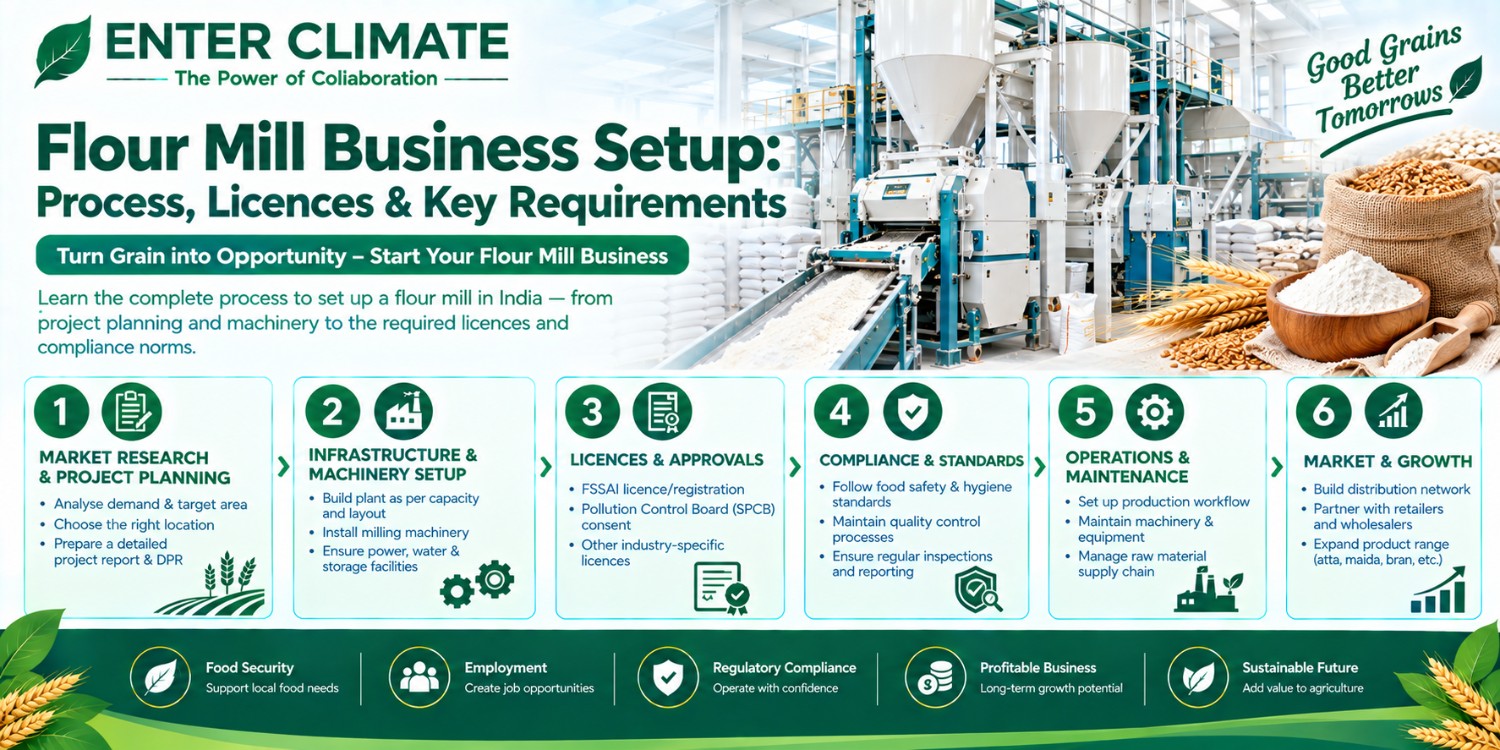
Starting a flour mill can be a good business opportunity because flour is used every day in homes, restaurants, bakeries, and food businesses. From wheat flour to other grain-based products, the demand for processed grains remains steady.
However, starting a flour mill is not only about buying machines and finding a place. You also need to understand the **[flour mill business set up](https://enterclimate.com/start-flour-mill-business)** process, choose the right location, arrange machinery, and complete the required registrations and licences.
**1. Plan Your Flour Mill Business**
The first step is to make a clear business plan. Decide what type of flour you want to produce and who your customers will be.
You may sell products directly to customers or supply flour to grocery stores, hotels, restaurants, bakeries, and wholesalers.
Your plan should cover:
* Type of flour and products
* Production capacity
* Machinery and equipment
* Raw material requirements
* Factory or mill location
* Number of workers
* Estimated investment
* Packaging and selling method
A simple plan can help you understand how much money and space you will need before starting the business.
**2. Choose a Suitable Location**
The location of a flour mill is important. You need enough space for machinery, raw material storage, production, packaging, and finished products.
The site should also have proper electricity, water supply, transportation access, and waste-management arrangements.
Before finalising the location, check the local rules and land-use requirements. Environmental permissions may also depend on the type and scale of the unit.
**3. Arrange Machinery and Raw Materials**
A flour mill needs suitable machinery for cleaning, grinding, sieving, and packing the final product.
The exact machines depend on the type and capacity of the mill. Good-quality machinery can help improve production and reduce unnecessary material loss.
Wheat and other grains should also be purchased from reliable suppliers. Proper storage is important because moisture, insects, and poor handling can affect the quality of the grains.
**4. Complete the Required Licences and Registrations**
Licences are an important part of any food-processing business. A flour mill may need different registrations and approvals depending on its location, capacity, business structure, and activities.
Some common requirements may include:
* Business registration
* FSSAI registration or licence, as applicable
* GST registration, where applicable
* Local trade or municipal licence
* Pollution Control Board consent, where applicable
* Factory-related approvals, where applicable
* Fire and safety approvals, where applicable
* Legal metrology and packaging-related compliance, where applicable
The exact requirements can vary from one state to another. Therefore, it is better to check the rules applicable to your specific location before starting operations.
**5. Pay Attention to Environmental Compliance**
A flour mill may generate dust, waste material, packaging waste, and other types of operational waste. Proper handling of these materials is important for maintaining a clean and safe workplace.
Depending on the project and applicable regulations, environmental permissions or consent from the relevant Pollution Control Board may be required.
Businesses should also make sure that dust-control systems, waste handling, worker safety, and other environmental measures are properly planned.
Companies planning other industrial projects should follow the same approach. For example, a **[Dairy Industry Plant Set Up](https://enterclimate.com/dairy-industry-setup)** may require specific environmental and food-related approvals, while a **[Pesticide Manufacturing Plant Set Up](https://enterclimate.com/pesticide-industry-setup)** can involve more detailed environmental and safety requirements because of the nature of the activity.
**6. Focus on Food Safety and Quality**
Customers expect flour to be clean, safe, and properly packed. Therefore, quality control should be part of the business from the beginning.
The grains should be checked before processing. The production area should be kept clean, and workers should follow basic hygiene practices.
Packaging should also provide important information such as the product name, quantity, manufacturing details, and other information required under applicable rules.
**7. Prepare for Waste and Dust Management**
Flour mills can produce dust during different stages of processing. Installing suitable dust-collection and ventilation systems can help keep the workplace cleaner.
Waste such as husk, bran, damaged grains, and packaging material should be handled properly. Some by-products may also have commercial value and can be sold for suitable uses.
Good waste management not only supports compliance but can also help reduce business losses.
**8. Get Professional Compliance Support**
Setting up a flour mill involves several business, food, environmental, and local compliance requirements. Understanding these requirements early can save time and prevent avoidable problems later.
Enterclimate provides environmental compliance and consultancy support to businesses working on different industrial and regulatory projects. Professional guidance can help businesses understand applicable approvals and plan their compliance requirements before starting operations.
The same principle applies to other industries. A **[Stone Crusher Plant Setup](https://enterclimate.com/stone-crushing-unit-setup)**, for example, may involve environmental permissions and pollution-control requirements that need to be considered during project planning.
**Conclusion**
Starting a flour mill requires more than machinery and raw materials. A successful flour mill business set up needs proper planning, a suitable location, quality machinery, food-safety practices, and the right licences and approvals.
Before investing, understand the requirements that apply to your state and type of project. Taking care of compliance from the beginning can make the setup process smoother and help the business operate with fewer problems in the future.
**Author Profile**
Upendra Sharma
Upendra Sharma is an **[Environmental Compliance](https://enterclimate.com/environmental-compliance-monitoring)** Consultant associated with Enterclimate. He writes about environmental regulations, industrial approvals, waste management, and compliance requirements to help businesses better understand the steps involved in setting up and operating their projects.